-
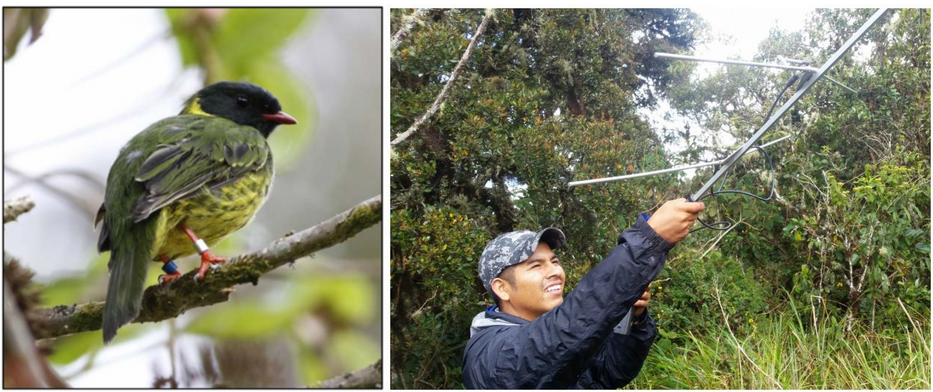
The Green-and-Black Fruiteater (Pipreola riefferii) is one of the emblematic species of the Andean cloud forest. Nicolas Mamani-Cabana, who worked as a field assistant on our research for three years, led the analysis and writing of this new paper published in Ornitologia Neotropical. Using radio tracking data that he helped collect, he analyzed the home…
-
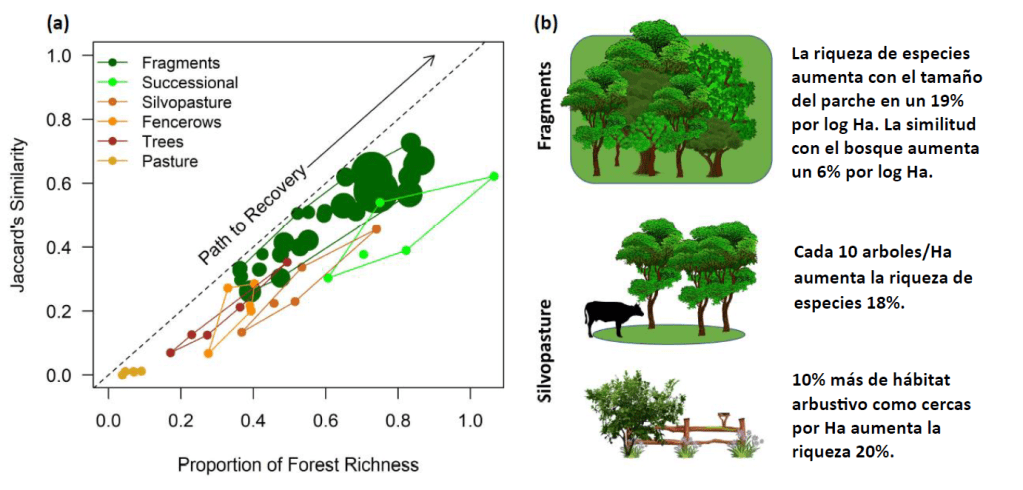
Our applied conservation research on managing tropical montane forest bird communities in agricultural landscapes is now published in Conservation Biology. We provide precise recommendations for retaining habitat features in tropical countrysides and how they support the retention of avian biodiversity. We also conduced a pan-Andean analysis of species-specific sensitivity to anthropogenic disturbance for 800+ Andean…
-
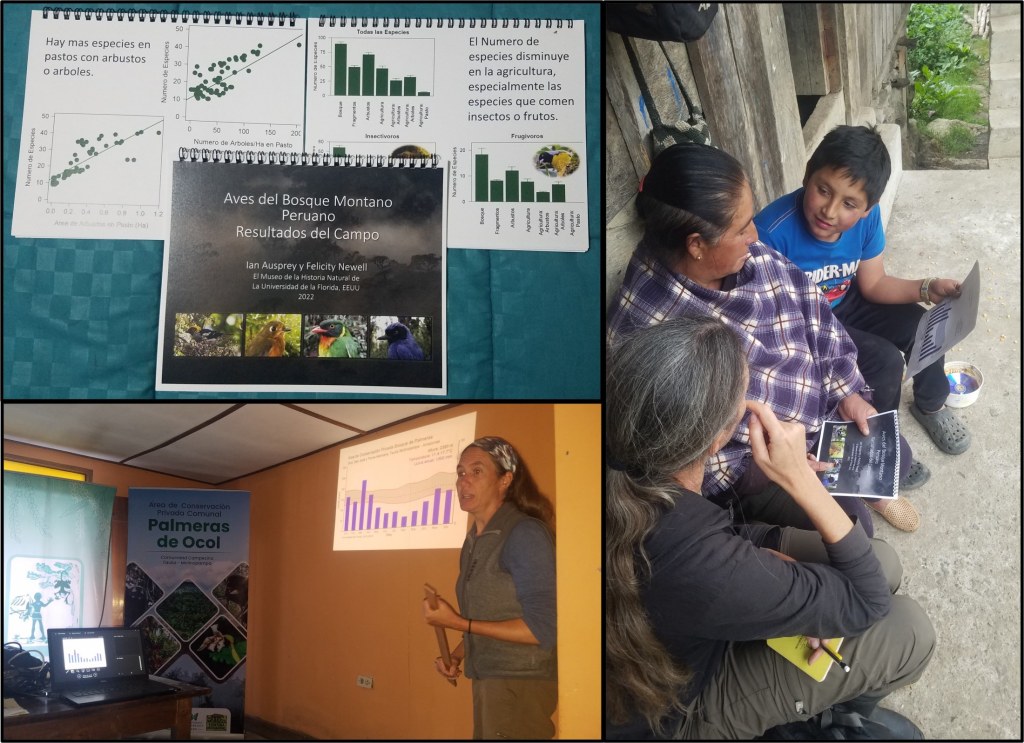
We recently returned from a trip to our field sites in Peru for the first time since 2019 and the onset of the pandemic. It was a relief to visit old friends and know that everyone was safe after a crazy three years. The main object of our trip was to share summaries of our…
-
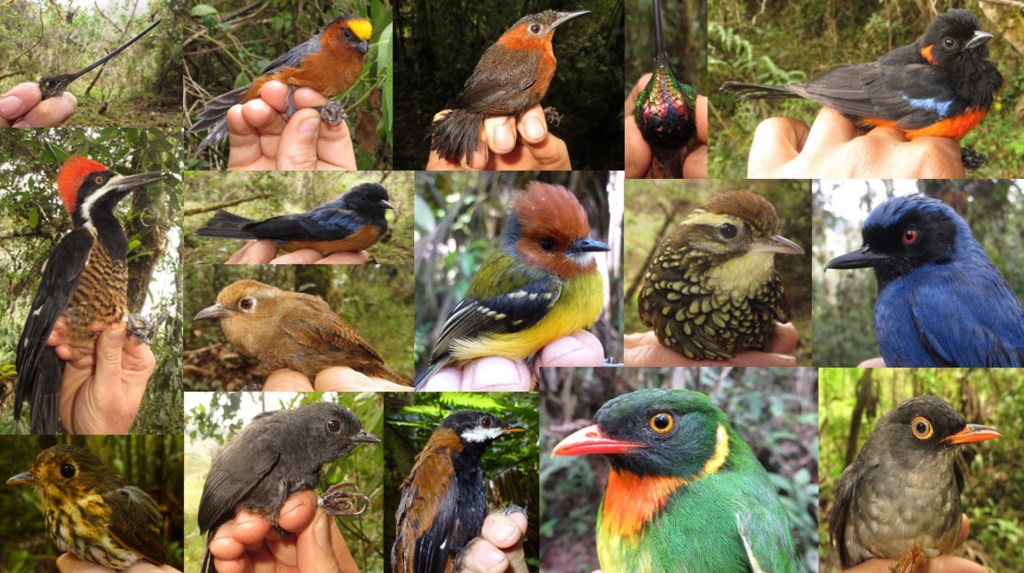
We have a new paper out in Journal of Animal Ecology that uses species-specific functional traits related to morphology, diet, and environmental niche breadth to predict abundance changes of cloud forest birds along an agricultural land use gradient in Peru. In addition, we show that the ecological niche space occupied by bird communities in countryside…
-
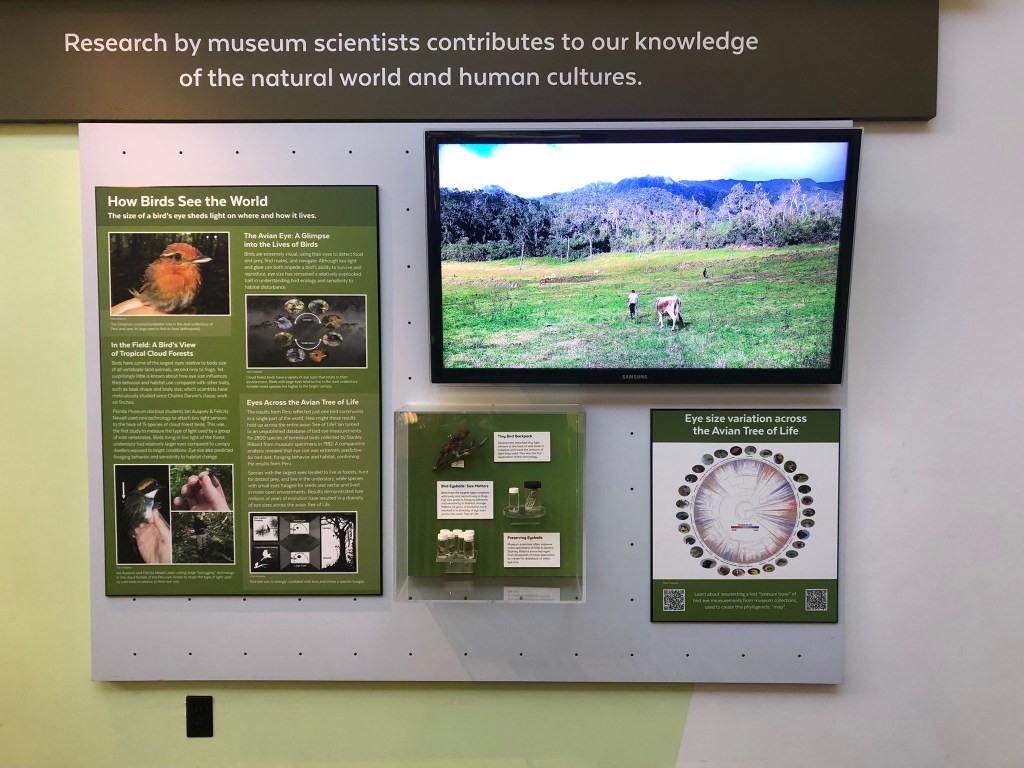
I had the great pleasure to develop a public exhibit now on display at the Florida Museum of Natural History that interprets our research on the ecology and evolution of visual systems across the Avian Tree of Life and use of light microenvironments by cloud forest birds in Peru. It has always been a dream…
-
My work on the ecological and evolutionary correlates of avian vision was recently published in Proceedings of the Royal Society B: Biological Sciences and covered by press in Scientific American and the Washington Post. This research depended on the heroic efforts of Stanley Ritland, who painstakingly measured eyes from preserved museum specimens for his unpublished…
-
I’m excited to be moving to Switzerland in the fall of 2021 to work as a Postdoctoral Researcher within the Institute of Ecology and Evolution at the University of Bern. I’ll be a member of the Conservation Biology Division, working under Dr. Raphaël Arlettaz, and will be engaged in teaching, student mentoring, and research regarding…
-
I recently had fun leading an outreach activity as part of the Florida Museum of Natural History’s “Museum in the Parks” program. I hosted two videos on the birds of Payne’s Prairie and the importance of museum collections to ecological research. Check them out at this link and navigate to the menu title that says…
-
Our work on the effects of light on tropical bird communities has been published in the journal Ecology! The Florida Museum of Natural History has written a nice press release about the study, which shows how light contributes to the decline of cloud forest birds in agricultural landscapes. A big thank you to National Geographic,…
-
As you read below we spent the last week at our friend’s forest and lovely casita in Ocol. Just getting to the site is a good example of the adventure involved in accessing some of our study sites. We first leave our apartment in Chachapoyas early in the morning, traveling for two hours in one…
-
Subscribe
Subscribed
Have a WordPress.com account? Log in now.

